Our Voice
Our Florida
Building a Better
Democracy for All


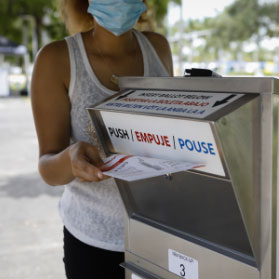
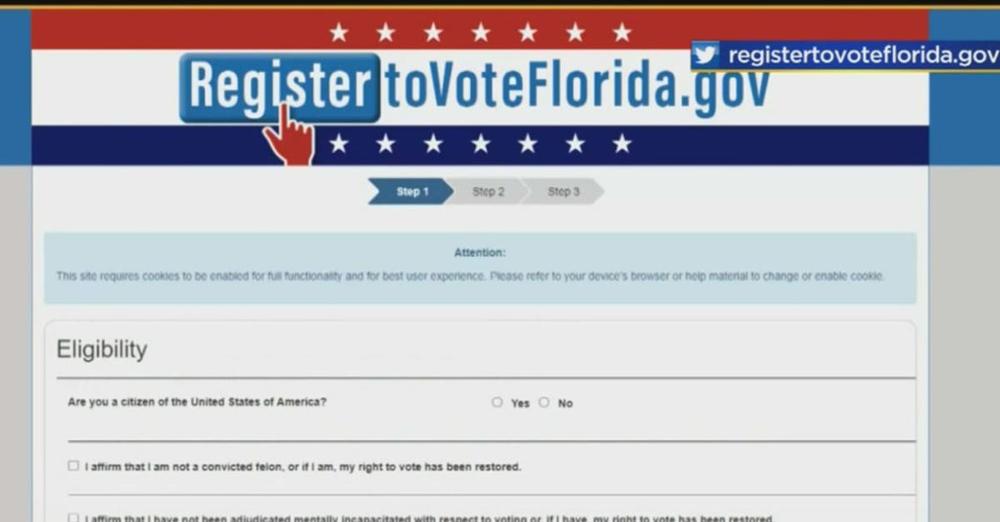
The deadline for voters to request that ballots are mailed to them ahead of the March 19 Municipal and Presidential Preference Primary elections is TODAY, March 7th, at 5 p.m.
Due to the vote-by-mail enrollment reset following the 2022 General Election, voters might be unaware that they will not be receiving their vote-by-mail ballots unless they re-submitted a request and they could miss the deadline. Please use and share this convenient resource that will direct voters to each county's online vote-by-mail request site.
There are many municipal elections happening across the state and voters should not miss out on those. Some counties holding municipal elections include Broward, Collier, Flagler, Holmes, Miami-Dade, Orange, Palm Beach, Pinellas, and Sarasota.
Upcoming Election
Saturday, March 9 - Saturday, March 16
Tuesday, March 19
LEGISLATIVE TOWN HALL MEETING


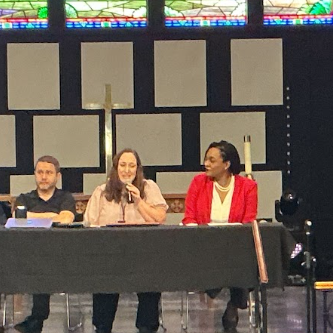
State Voices Florida is excited to announce that we’ll be having a virtual Town Hall on Tuesday, March 26 at 2 p.m.
The focus of the Town Hall will be on the Florida 2024 legislative session that concluded earlier this month. Our main focus will be on voting rights legislation, but we’ll also touch on criminal justice reform and how some of our legislators were treated during this session.
The event will be moderated by State Voices Florida Communications Director Larry Hannan. The panel will include:
-
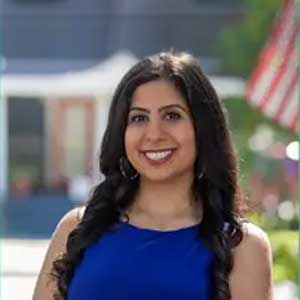
State Representative Anna Eskamani
-
Black Voters Matter Florida Organizing Director Jamil Davis
-
ACLU of Florida Policy Strategist Abdelilah Shkir
To register for the town hall, click the button below.
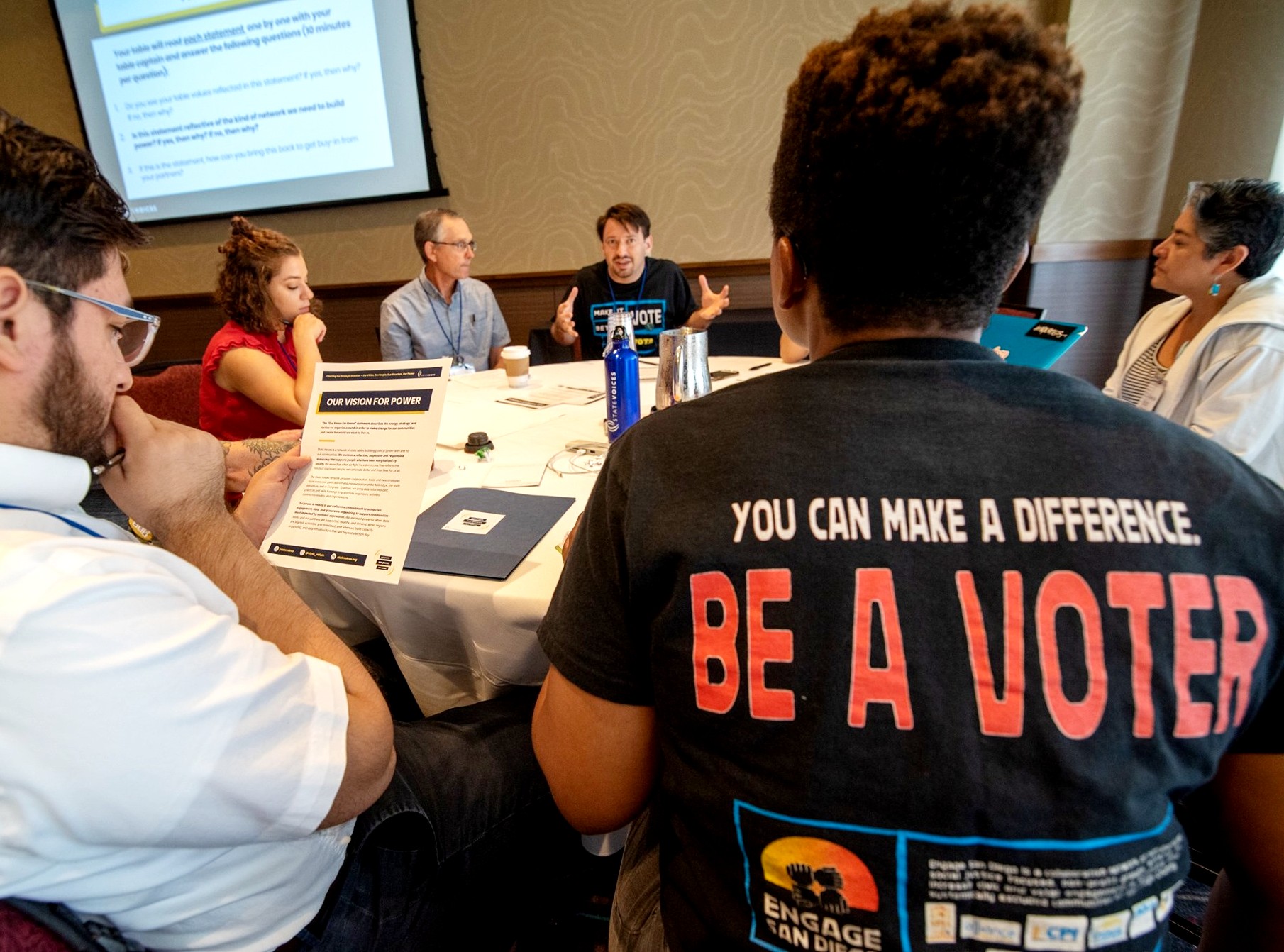
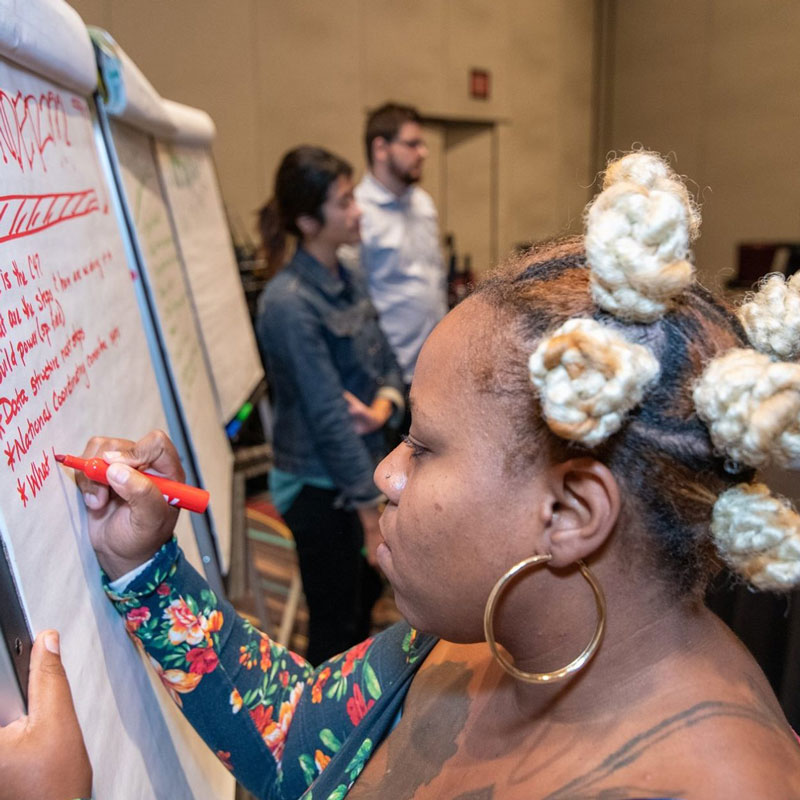
State Voices Florida is a statewide civic engagement organization committed to bringing together progressive 501(C)(3) organizations to work together in building power around civic issues. If the progressive movement works together and speaks with one voice, great things will happen.
We believe everyone should have the right to vote, and voting should be simple and easy. We also support reproductive rights, environmental justice, criminal justice reform, economic justice and affordable housing for everyone.
Along with our partner organizations, we use data and technology, people-powered campaigns, and coalitions to collectively build a multiracial democracy that allows every Floridian to thrive and live in their full dignity. We are a member of the State Voices Affiliated Network, a network of state-based coalitions, advocates, and organizers fighting for a healthy, multiracial democracy.
We have over 100 partner organizations. They range from large national organizations with hundreds of employees to small nonprofits based out of a single county or even a single neighborhood. We provide support and tools to nonprofit partners regardless of size, to improve infrastructure while increasing capacity for all of our partners.
Tallahassee, FL – Earlier today the Florida Senate passed an amended version of House Bill 991. This bill is unnecessary and will make it harder to vote for American citizens who live in Florida.
This legislation would require people to provide proof of citizenship via a birth certificate or passport when registering to vote in Florida. According to Voteriders 34.5 million Americans don’t have a current state-issued ID, and 21 million—1 in 10 eligible voters—don’t have easy access to a US birth certificate or passport.
Under the amendments passed before bill approval Wednesday, these requirements will not go into effect for the 2026 Congressional and Statewide elections, but will go into effect in January 2027, be used during the 2028 presidential elections.
The following is a statement from Larry Hannan, communications and policy director at State Voices Florida.
Tallahassee, FL – Earlier today the Florida Senate passed an amended version of House Bill 991. This bill is unnecessary and will make it harder to vote for American citizens who live in Florida.
This legislation would require people to provide proof of citizenship via a birth certificate or passport when registering to vote in Florida. According to Voteriders 34.5 million Americans don’t have a current state-issued ID, and 21 million—1 in 10 eligible voters—don’t have easy access to a US birth certificate or passport.
Under the amendments passed before bill approval Wednesday, these requirements will not go into effect for the 2026 Congressional and Statewide elections, but will go into effect in January 2027, be used during the 2028 presidential elections.
The following is a statement from Larry Hannan, communications and policy director at State Voices Florida.
For Immediate Release
March 5, 2026
Tallahassee, FL – Earlier today the Florida Senate passed House Bill 1471. It would allow the governor and Cabinet to designate groups as “domestic terrorist organizations” based on secret evidence. It would also allow a new government surveillance force to investigate Floridians who express opinions the state determines are “a threat” to the interests of “this state and the United States of America.”
State Voices Florida opposes this legislation and as unnecessary and likely to be abused by government officials. Florida should not be able to designate organizations “domestic terror organizations” based on evidence that is not public.
Tallahassee, FL – Earlier today the Florida Senate passed an amended version of House Bill 991. This bill is unnecessary and will make it harder to vote for American citizens who live in Florida.
This legislation would require people to provide proof of citizenship via a birth certificate or passport when registering to vote in Florida. According to Voteriders 34.5 million Americans don’t have a current state-issued ID, and 21 million—1 in 10 eligible voters—don’t have easy access to a US birth certificate or passport.
Under the amendments passed before bill approval Wednesday, these requirements will not go into effect for the 2026 Congressional and Statewide elections, but will go into effect in January 2027, be used during the 2028 presidential elections.
The following is a statement from Larry Hannan, communications and policy director at State Voices Florida.

- Everyone deserves the ability to achieve their full potential and the freedom to be their truest selves. We envision a country in which this is a reality.
- BIPOC communities must be at the decision-making table because those most impacted by the problems have the best ideas for the solutions.
- Voting is an action we can take to achieve our shared vision—and casting a ballot should be easy and accessible to each voter. Every vote must count.
The Fight For Fair Maps Continues
As the Supreme Court’s Louisiana v. Callais decision came down during the SOLVE 2026 Convening, Juanica, executive director of State Voice FL, shared her perspective in real time on what the ruling could mean for communities across the South.
Coming from Florida, she connects the developments in her state to a larger pattern of communities being divided, voices being diluted, and political power being weakened. She explains why fair maps matter and why communities need accessible ways to turn engagement into action.
Even in the uncertainty of the moment, Juanica points to a source of hope, because people are still showing up. For her, that continued engagement is an opportunity to build stronger structures for communities to shape what comes next.
Watch the full conversation to hear Juanica’s perspective on fair maps, political power, and what comes next for communities across the South.
Nearly every state has changed its voting laws in some way since the last midterm election. In some states, these were minor amendments voters will not even notice. But in other states, the changes will require voters to adjust how they cast their ballots or significantly affect how election officials do their jobs — often in harmful ways. Some of the more significant trends since the 2022 midterms will bring new restrictions and risks to voters and election administrators. They include:
- Changes to mail ballot deadlines: Six states enacted laws to stop counting mail ballots that are postmarked by Election Day if they arrive afterward. A Kansas state court blocked the law from taking effect.
- Restrictions to voter ID: 13 states have limited the forms of ID voters can use or eliminated alternatives to showing identification
- Hunts for noncitizens on the voter rolls: 18 states have enacted laws meant to identify alleged noncitizens on their voter rolls.
- Leaving ERIC: Eight states have left the Electronic Registration Information Center (ERIC) since 2022, though Virginia later rejoined. Leaving ERIC has left local officials scrambling for other data sources to keep voter lists current.
In this report, we take a closer look at seven states with closely contested statewide races this fall — Georgia, Iowa, Michigan, New Hampshire, North Carolina, Ohio, and Texas — and examine how significant changes to election law in these states will affect how voters cast their ballots and how election officials do their jobs.
Gov. Ron DeSantis’ administration is plowing ahead with officially designating a leading Muslim civil rights nonprofit, a decentralized movement known as antifa, and more than 100 other groups as “domestic terrorist organizations,” in a move that critics are decrying as unprecedented and unconstitutional.
DeSantis and the Florida Cabinet voted to advance the terrorist designations Tuesday, approving the proposal in just over 30 seconds and with no discussion, under a new state law that has alarmed free speech defenders, student advocates and people of faith.
The legislation represents another expansion of Florida’s state security apparatus under DeSantis, who has opened pop-up immigration detention centers, re-established the Florida State Guard – of which he is the commander in chief – and created an investigative unit to probe alleged election crimes. The remarkable expansion of police powers has also funneled hundreds of millions of taxpayer dollars to state vendors, including Republican political donors.
State Voices Florida is a statewide civic engagement organization committed to bringing together progressive 501(C)(3) organizations to work together in building power around civic issues. If the progressive movement works together and speaks with one voice, great things will happen.
We believe everyone should have the right to vote, and voting should be simple and easy. We also support reproductive rights, environmental justice, criminal justice reform, economic justice and affordable housing for everyone.
Along with our partner organizations, we use data and technology, people-powered campaigns, and coalitions to collectively build a multiracial democracy that allows every Floridian to thrive and live in their full dignity. We are a member of the State Voices Affiliated Network, a network of state-based coalitions, advocates, and organizers fighting for a healthy, multiracial democracy.
We have over 100 partner organizations. They range from large national organizations with hundreds of employees to small nonprofits based out of a single county or even a single neighborhood. We provide support and tools to nonprofit partners regardless of size, to improve infrastructure while increasing capacity for all of our partners.
Our Voice
Our Florida
Building a Better Democracy for All
State Voices Florida is a statewide civic engagement organization committed to bringing together progressive 501(C)(3) organizations to work together in building power around civic issues. If the progressive movement works together and speaks with one voice, great things will happen.
We believe everyone should have the right to vote, and voting should be simple and easy. We also support reproductive rights, environmental justice, criminal justice reform, economic justice and affordable housing for everyone.
Along with our partner organizations, we use data and technology, people-powered campaigns, and coalitions to collectively build a multiracial democracy that allows every Floridian to thrive and live in their full dignity. We are a member of the State Voices Affiliated Network, a network of state-based coalitions, advocates, and organizers fighting for a healthy, multiracial democracy.
We have over 100 partner organizations. They range from large national organizations with hundreds of employees to small nonprofits based out of a single county or even a single neighborhood. We provide support and tools to nonprofit partners regardless of size, to improve infrastructure while increasing capacity for all of our partners.
The Path to Power and Equality
Latest News

2026 Battleground Report: How Voting Rules Have Changed Since the 2022 Midterms

DeSantis exercises ‘unprecedented’ power to label groups ‘domestic terrorists’