2026 Legislative Session
January 13 - March 13, 2026
Legislative Issues
Fact Sheet: HB 1471 (Cassell) / SB 1632 (Grall) & HB 1473 (Cassell) / SB 1634 (Grall)
Stance: Oppose
- The quartet of bills now in the Florida House and Senate creates a vague, new designation of “domestic terrorist organization” for organizations engaging in allegedly dangerous activities intended to “coerce” the public or influence government policy “by intimidation or coercion.”
- In reality these bills allow the government to go after organizations they don’t like without having to justify why they’re doing it.
- Governor Ron DeSantis has already designated CAIR-Florida a terrorist organization despite offering no evidence that the Muslim civil rights organization has done anything to support terrorism. CAIR is now suing over the designation and asking for documentation on how DeSantis came to make this designation.
- HB 1471 and SB 1632 appear to be designed to clean up the mess DeSantis made with CAIR. It provides a definition for what a “domestic terrorist organization” is and also requires the Governor and Cabinet to approve the designation by a majority vote.
- Any organization that gets the terrorist designation would be barred from doing any business with the State, including universities and schools in Florida. People affiliated with an organization that gets the terrorist designation would also be expelled from Florida schools and in some cases could be charged with a crime.
- HB 1473 and SB 1634 would exempt any information on why the State designated an organization as a “domestic terrorist organization.” In layman’s terms, this would allow the state to designate any organization it doesn’t like a terrorist organization and it wouldn’t have to provide any proof that the organization actually is supporting terrorism.
- If these bills become law it’s a threat to all organizations the Governor and Cabinet don’t like, and could be used against all progressive nonprofit organizations and other advocacy groups.
- But the threat also extends to conservative groups. A future governor who is not conservative could use these powers to designate the NRA, Moms for Liberty or other conservative groups as a terrorist organization. Abuse can cut both ways.
- Most importantly, the State of Florida has no business designating any organization a supporter of terrorism. The State lacks the intelligence service and the overseas network that would allow it to ascertain which organizations are truly a threat. This is a responsibility best left to the federal government.
- Florida is currently in an affordability crisis and millions of people are in danger of losing their healthcare. Legislators, the Governor and Cabinet should be focused on bringing costs down and ensuring people who get sick aren’t bankrupted. Passing laws that allow the state to designate organizations they don’t like as terrorists is ignoring the most pressing issues facing Florida in 2026.
HB 1001 (Black) & SB 1134 (Yarborough)
This is political theater that will do real harm. These bills are censorship and intimidation tactics to undermine local governments addressing diverse communities’ needs, even threatening City and County Commissioners with removal from office. It would ban and defund a wide swath of local government action like operating women- and minority-owned business programs or supporting Pride festivals.
Overbroad and Overreaching State Censorship:
- Last year, House sponsor of HB 1001, Rep. Dean Black, said on a live mic that the legislation is intended to “once and for all destroy” DEI, muzzling local governments from speaking about or enacting their own values and priorities.
- The scorched earth approach sweepingly targets “any official action” by a local government, “directly or indirectly,” “including but not limited to […] ordinances, resolutions, rules, regulations, programs, or policies” related to DEI, without limit. It also voids every related existing ordinance, resolution, rule, regulation, program, or policies.
- This extremist approach allows for duly elected City and County Commissioners to be removed from office for alleged violations, a penalty typically reserved for self-dealing like embezzlement and bribery.
- These bills are mean-spirited and misguided. They are a systematic effort to whitewash history and deny that minority communities face distinct burdens. In doing so, they drive public health and safety backwards, banning tailored outreach and approaches that are designed to best solve those problems.
- These vague, politically charged bills are ripe for abuse and open the door to witch hunts or costly and frivolous litigation against local governments by extremists.
- The bill’s list of various special interest carve-outs do not fix these fundamental flaws.
Ending Programs and Activities to Recognize and Address Unique Needs
The bill threatens any local program or activity “designed or implemented with reference to race, color, sex, ethnicity, gender identity, or sexual orientation,” such as:
- A County Health Department sickle cell anemia program focused on African Americans or promoting Tay-Sachs screenings for the ethnic Jewish community
- Funding support for an HIV outreach targeted toward the LGBTQ community
- A City Police Department providing extra security as an in-kind support for a local Pride parade, Jewish food festival, or Women’s Equal Pay Day event
- Recognizing Black History Month or Miami-Dade County’s “Cuban Heritage Month”
- Operating a County Commission on the Status of Women, which exist from Okaloosa County to Broward Countyist from Okaloosa County to Broward County
Harry T. and Harriette V. Moore Voting Rights Act of Florida should become law
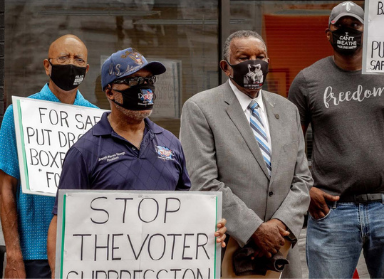
Florida has a longstanding history of voter suppression when it comes to voting. In the last few years, Florida has passed several anti-voter laws and actively targeted fair and transparent democracy. The State can make a major leap forward by enacting the Harry T. and Harriette V. Moore Voting Rights Act of Florida (FLVRA), which would be only the second State Voting Rights Act in the South.
The FLVRA would strengthen democracy for everyone in the Sunshine state and remove numerous obstacles to the ballot box that eligible voters of color currently face, and that have burdened voting rights throughout the state’s troubled history.
Passing the FLVRA would:
- Automatically register all eligible Floridians to vote and allow voter registration on Election Day, when they interact with the Department of Highway Safety and Motor Vehicles, unless they opt out.
- Make the Florida Secretary of State an elected position (The Governor now appoints someone to the role).
- Creates the Florida Voting Rights Act Commission within the Department of State (DOS) and requires DOS instead of the Office of Election Crimes & Security to conduct certain preliminary investigations into election crimes.
- Repeals recent Florida laws that have made it harder to vote by mail.
- Establishes Election Day as a holiday and authorizes Same-Day Voter Registration.
- Require counties with histories of voter suppression to get preclearance before making voting changes.
- Expands access to the ballot for eligible voters who don’t speak English.
- Strengthens transparency and accountability around election changes.
- Requires the state to create a database that lets returning citizens know if they owe fees or fines before they can register to vote.
The FLVRA builds on the foundations of the federal Voting Rights Act of 1965, as well as successful state Voting Rights Acts enacted in New York, Connecticut, Minnesota, California, Oregon, Washington, and Virginia. If enacted, the FLVRA would become the most comprehensive state Voting Rights Acts in the nation.
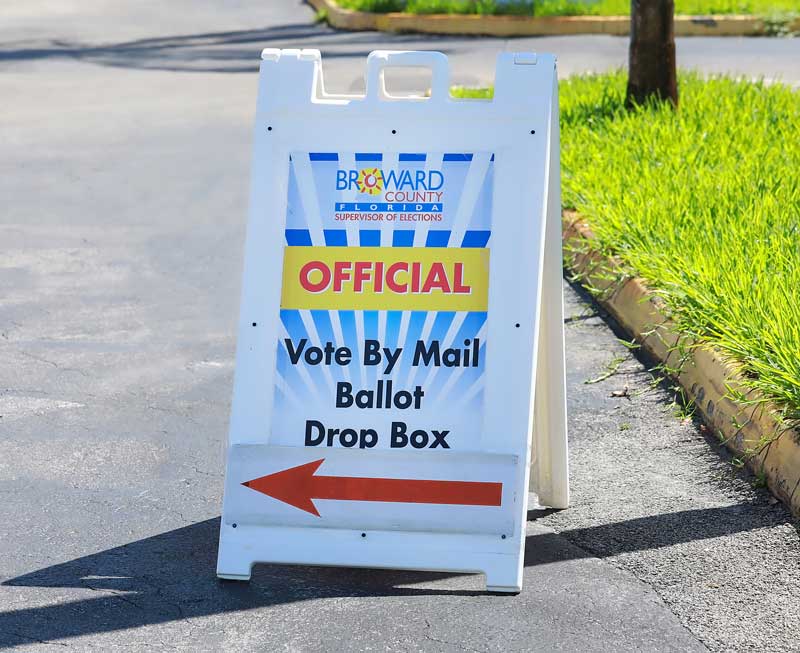
Unfortunately, anti-voter laws have created barriers to every step of the voting process, including restrictions on drop boxes, restrictions on vote-by-mail, a ranked choice voting ban, restrictions on election funding, and harsh penalties on organizations conducting community voter registration. Returning citizens, who had their right to vote restored by Amendment 4 to the Florida Constitution, are now left to discern whether they have paid all outstanding financial obligations specified within a sentencing document before registering to vote, and if they haven’t they risk arrest by voting. The VRA would fix most of these problems.
Florida has several pending bills that would require proof of citizenship to vote. These laws are harmful to our democracy because millions of eligible voters don’t have easy access to ID documents. VoteRiders’ research shows that 34.5 million Americans don’t have a current state-issued ID, and 21 million—1 in 10 eligible voters—don’t have easy access to a US birth certificate or passport.
House Bill 991 and Senate Bill 1334 (Grall) both propose to add a proof of citizenship requirement to the voter registration and list maintenance process in Florida. House Bill 991’s process would rely largely on information gathered by the Department of Highway Safety and Motor Vehicles (DHSMV), while the Senate Bill would combine DHSMV information with information received from other state and federal sources. These proposals would apply to all Florida voters: new registrants as well as the state’s 13.5 million current registered voters would be unable to vote without first verifying their U.S. citizenship. Both bills also propose changes to post-election audits and voting systems, and House Bill 991 also adds limitations on foreign contributions in elections.
These bills will not prevent non-citizens from voting, because non-citizens aren’t voting in elections, and will almost certainly keep Americans from being able to register to vote.
False claims that waves of noncitizens were voting in the 2024 general election led to a surge in new legislation introduced in 2025 that would require voters to provide documentary proof of citizenship (DPOC) before registering to vote. These DPOC laws would require all voters to prove their citizenship with a document such as a passport or birth certificate to register to vote or update their voter registration.
The laws can also apply to voters who are already registered but who make a change to their registration, such as when they move to a new apartment, condo, or house in the same state. Right now, HB 991 requires this, and it will make it harder to vote, even though the law requires changing your voter registration when you move.
These laws also remove some identifications accepted now to vote, such as student IDs. This will also make it harder for American citizens to register to vote.
Voter ID laws like HB 991 and SB 1334 are not needed, will prevent voter fraud, and will make it harder for American citizens in Florida to vote.
Donald Trump has been calling on Republican leaders across the country to redraw congressional districts with one clear goal: to rig the voting maps in his party’s favor before the 2026 midterm elections. But the Florida Constitution is extremely clear: partisan gerrymandering is illegal in the state of Florida.
The people of Florida made partisan gerrymandering illegal in our state when we passed the Fair Districts Amendments in 2010 with a 63% vote. Recent polling from Common Cause shows that 55% of Florida voters from across political affiliations oppose mid-decade redistricting and 66% say they support Congress banning maps that favor one political party.
Drawing a new map as part of this nationwide partisan scheme would undermine the will of the people of Florida, create instability in our elections, risk silencing Black, Brown, immigrant, and working-class communities, and waste millions in taxpayer dollars that should be focused on Florida’s affordability crisis.
In July 2025, Governor DeSantis began calling for a new Florida congressional map, even though the current voting map is the one he drew and strong-armed through the legislature in 2022, and the current map has been upheld in both state and federal court.
Donald Trump and his political team have been pressuring Republican state leaders across the country to draw new congressional maps in the middle of the decade explicitly to get more Republican seats in the House of Representatives.
Florida state leaders are unlikely to say that this is the reason for proposing new maps, because partisan map drawing is explicitly illegal under Florida law. Floridians should be prepared to hear a lot of excuses for why a new map “needs” to be drawn, but no court has ordered a new map – this is a political move.
Article III, Section 20 of the Florida Constitution states: “No district shall be drawn with the intent to favor or disfavor a political party or an incumbent.”
The Supreme Court of the United States has affirmed that states have a right to make partisan gerrymandering illegal. The people of Florida made it illegal when we passed the Fair Districts Amendments in 2010.
Recent and pending court cases do not require Florida to draw a new map, despite what Governor DeSantis said.
Florida’s current congressional map, which was drawn by the Governor, has been upheld by both the federal court and the Supreme Court of Florida. There is no court order or decision that requires or proposes that Florida draw a new map before the 2030 census.
Bill Tracker
| Bill | Description | SVFL Support/Oppose | Status |
|---|---|---|---|
| House Bill 1205 | Makes it harder and more expensive to get citizen led constitutional amendments on the ballot. | Oppose | HB 1205 passed the House Government Operations Subcommittee and is now in the State Affairs Committee. |
| Senate Bill 7016 | Makes it harder and more expensive to get citizen led constitutional amendments on the ballot. | Oppose | Senate Bill 7016 passed the Ethics and Elections Committee by a 6-3 vote. It is now in the Fiscal Policy Committee. |
| House Bill 1409 | Florida Voting Rights Act. | Support | House Bill 1409 referred to the Government Operations Subcommittee. |
| Senate Bill 1582 | Florida Voting Rights Act. | Support | Senate Bill 1582 referred to the Ethics and Elections Committee. |
| House Bill 1139 | Repeals Florida’s six week abortion ban. | Support | House Bill 1139 referred to the Health Professions & Programs Subcommittee. Senate Bill 870 referred to the Health Policy Committee. |
| Senate Bill 870 | Repeals Florida’s six week abortion ban. | Support | Senate Bill 870 referred to the Health Policy Committee. |
| House Bill 613 | Prohibits jail or other adult facility from holding child for criminal prosecution before hearing to determine if child should be prosecuted as an adult. | Support | Bill referred to the House Criminal Justice Subcommittee. |
| Senate Bill 848 | Requiring the Florida Commission on Offender Review to keep a database of returning citizens that shows what fees and fines they owe that keeps them from getting their right to vote back. | Support | Referred to the Committee on Criminal Justice. |
| Senate Bill 864 | Allows constitutional amendments to pass with 50 percent of vote instead of the current 60 percent. | Support | Referred to the Committee on Ethics and Elections. |
| Senate Bill 1754 | Florida Museum of History at the Town of Eatonville (the first majority Black town in Florida). | Support | Referred to the Committee on Community Affairs. |
| Senate Bill 1786 | Creates parole for longtime prisoners. | Support | Referred to the Committee on Criminal Justice. |
Legislative Resources
Our Voice
Our Florida
Building a Better Democracy for All
State Voices Florida is a statewide civic engagement organization committed to bringing together progressive 501(C)(3) organizations to work together in building power around civic issues. If the progressive movement works together and speaks with one voice, great things will happen.
We believe everyone should have the right to vote, and voting should be simple and easy. We also support reproductive rights, environmental justice, criminal justice reform, economic justice and affordable housing for everyone.
Along with our partner organizations, we use data and technology, people-powered campaigns, and coalitions to collectively build a multiracial democracy that allows every Floridian to thrive and live in their full dignity. We are a member of the State Voices Affiliated Network, a network of state-based coalitions, advocates, and organizers fighting for a healthy, multiracial democracy.
We have over 100 partner organizations. They range from large national organizations with hundreds of employees to small nonprofits based out of a single county or even a single neighborhood. We provide support and tools to nonprofit partners regardless of size, to improve infrastructure while increasing capacity for all of our partners.
Legislative News

Florida elections offices audited over marijuana amendment petitions

Advocacy organizations gear up for redistricting fight, regular session election bills